Single-manual harpsichord | John Broadwood | 1793
Single-manual harpsichord | John Broadwood | 1793
(opens in a new tab) (opens in a new tab) (opens in a new tab) (opens in a new tab) (opens in a new tab)
(Note: Each icon above opens in a new tab.)
Audio Clips
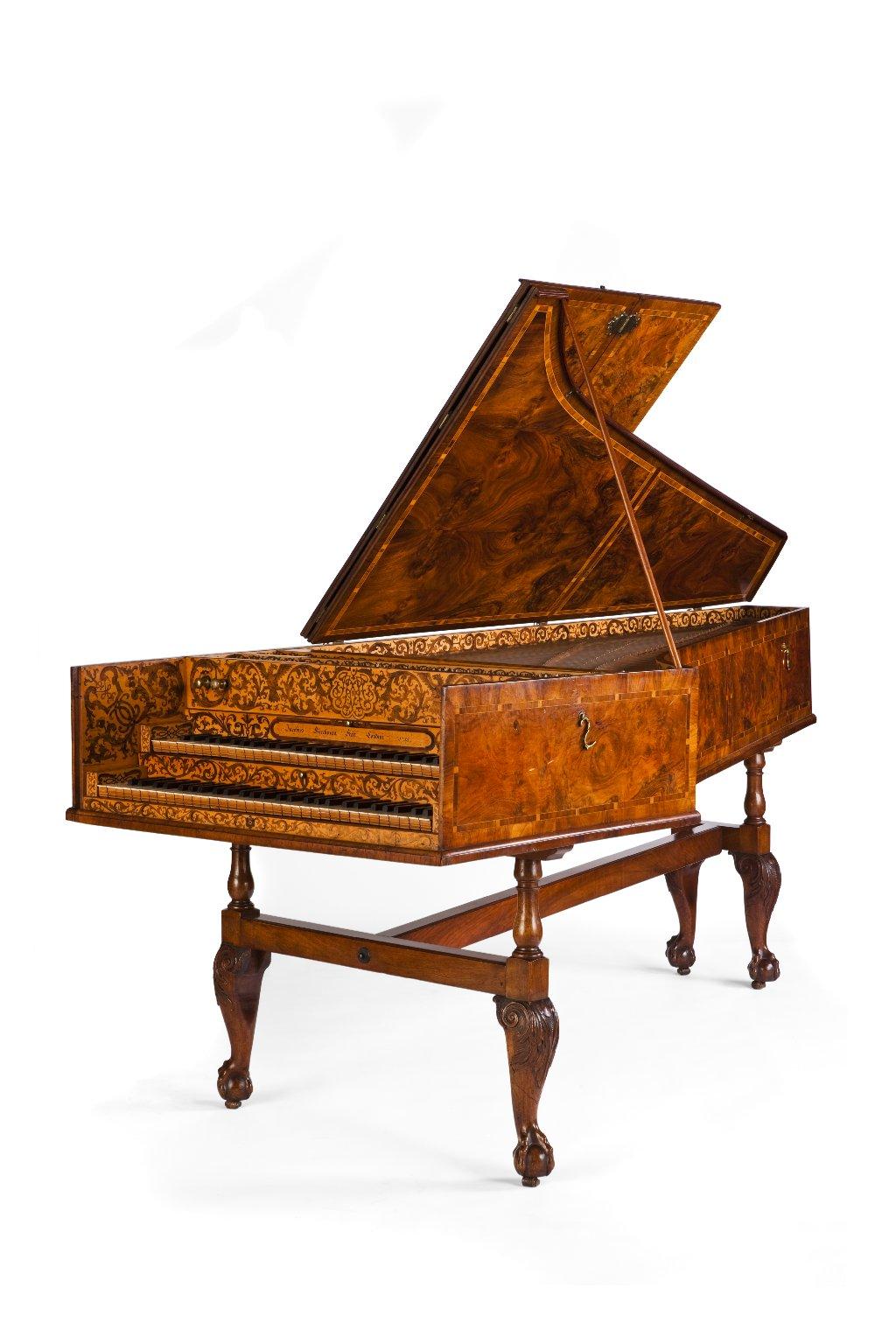
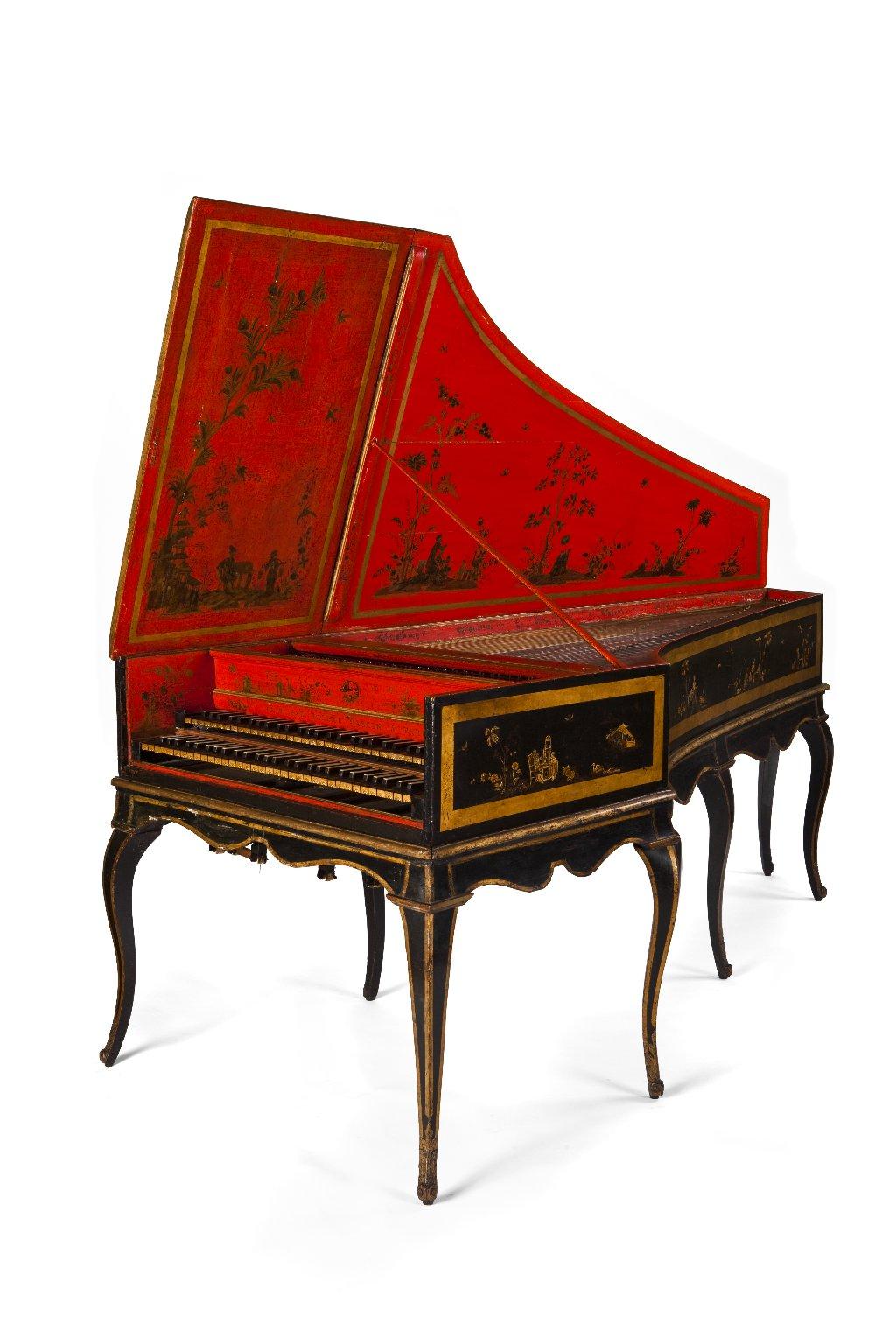
This harpsichord is one of the last of its kind. It was produced by John Broadwood at a time when pianos were fast becoming the instruments of choice for both private homes and concert halls. It has wooden slats controlled by a pedal that may be used to alter its volume as well as a range of different options for the player to select, including using leather instead of quilll to pluck the strings and a mute effect.
This instrument is the last dated harpsichord made by the firm of Shudi and Broadwood known to have survived, and the only one signed by Broadwood alone. This instrument has the same machine pedal and swell pedal as the 1766 Shudi harpsichord; mechanical devices such as these became very common on later harpsichords. One set of jacks in the harpsichord originally had leather plectra instead of quill to produce a different timbre or quality of sound. (Raymond Russell Collection).
Related Instruments
Related Instruments