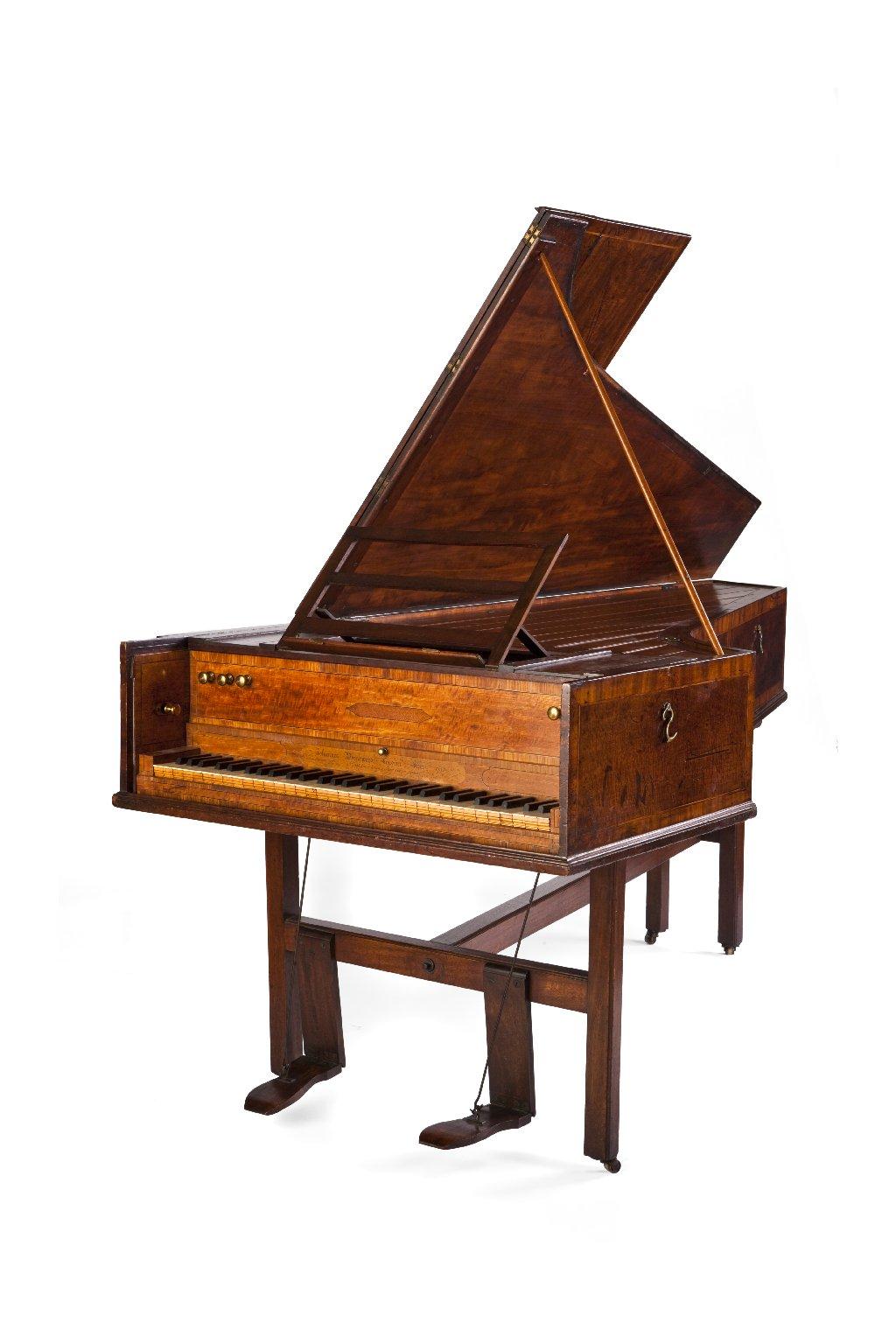
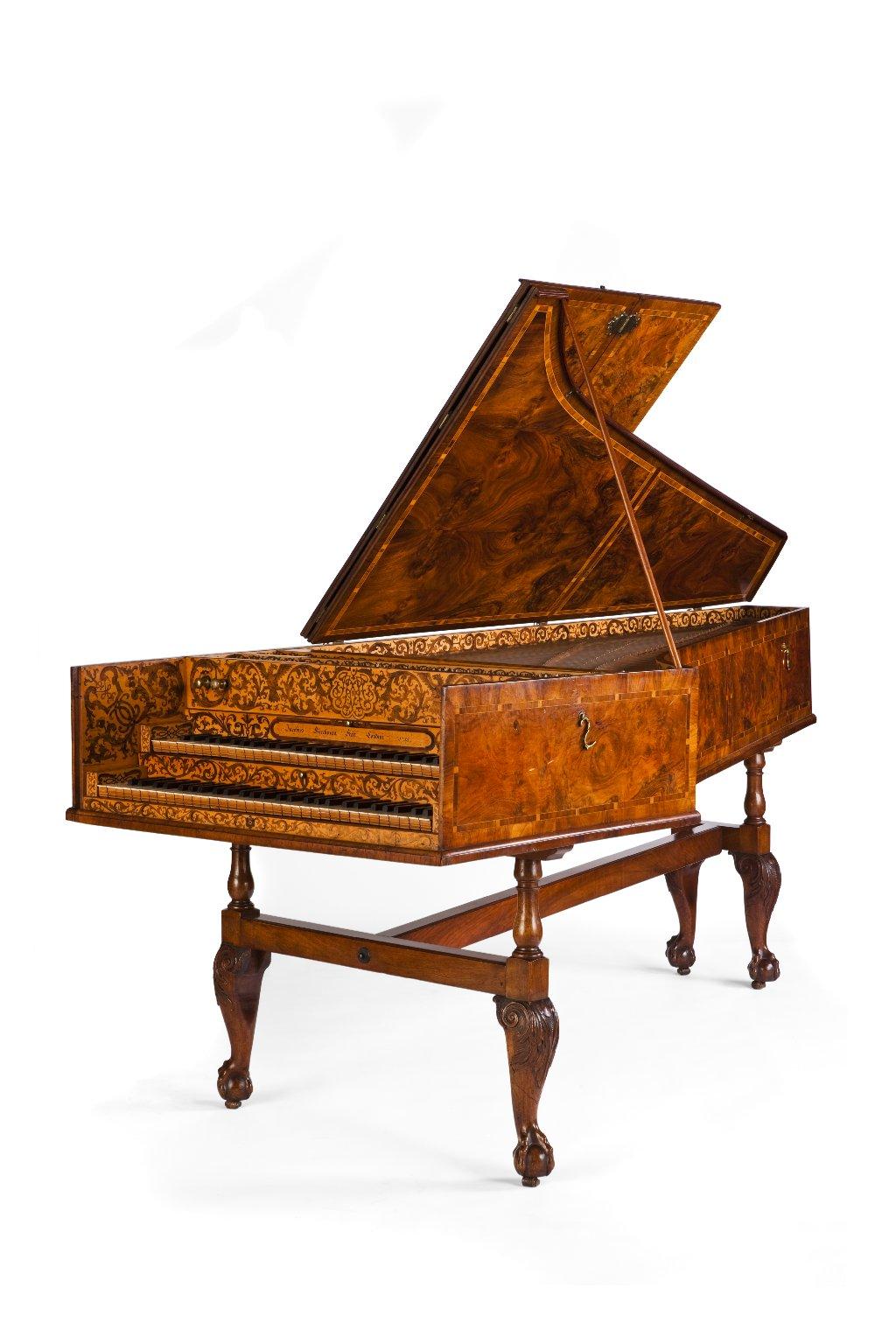
Double-manual harpsichord | Robert Falkener | 1773
Double-manual harpsichord | Robert Falkener | 1773
(opens in a new tab) (opens in a new tab) (opens in a new tab) (opens in a new tab) (opens in a new tab)
(Note: Each icon above opens in a new tab.)
Audio Clips
Two years before Robert Falkener produced this harpsichord he was taken to court by the famous maker Jacob Kirkman, whose instruments commanded a high price. Kirkman accused Falkener of forgery. We don’t know the outcome of the case, but Falkener used Kirkman’s name on this instrument, even though it wasn’t a direct copy of a Kirkman harpsichord.
Although this instrument bears an inscription suggesting it was made by the Kirkman firm, and that it looks much like their usual output, an inscription under the soundboard records that it was actually made by Robert Falkener. Falkener worked for Kirkman but made at least two instruments himself which were passed off as Kirkman’s work, obviously with the intent of selling it for a higher price than his own instruments would be worth. The instrument is excellent sounding, although the machine stop mechanism works in a manner different to Kirkman’s usual operation.
Related Instruments
Related Instruments