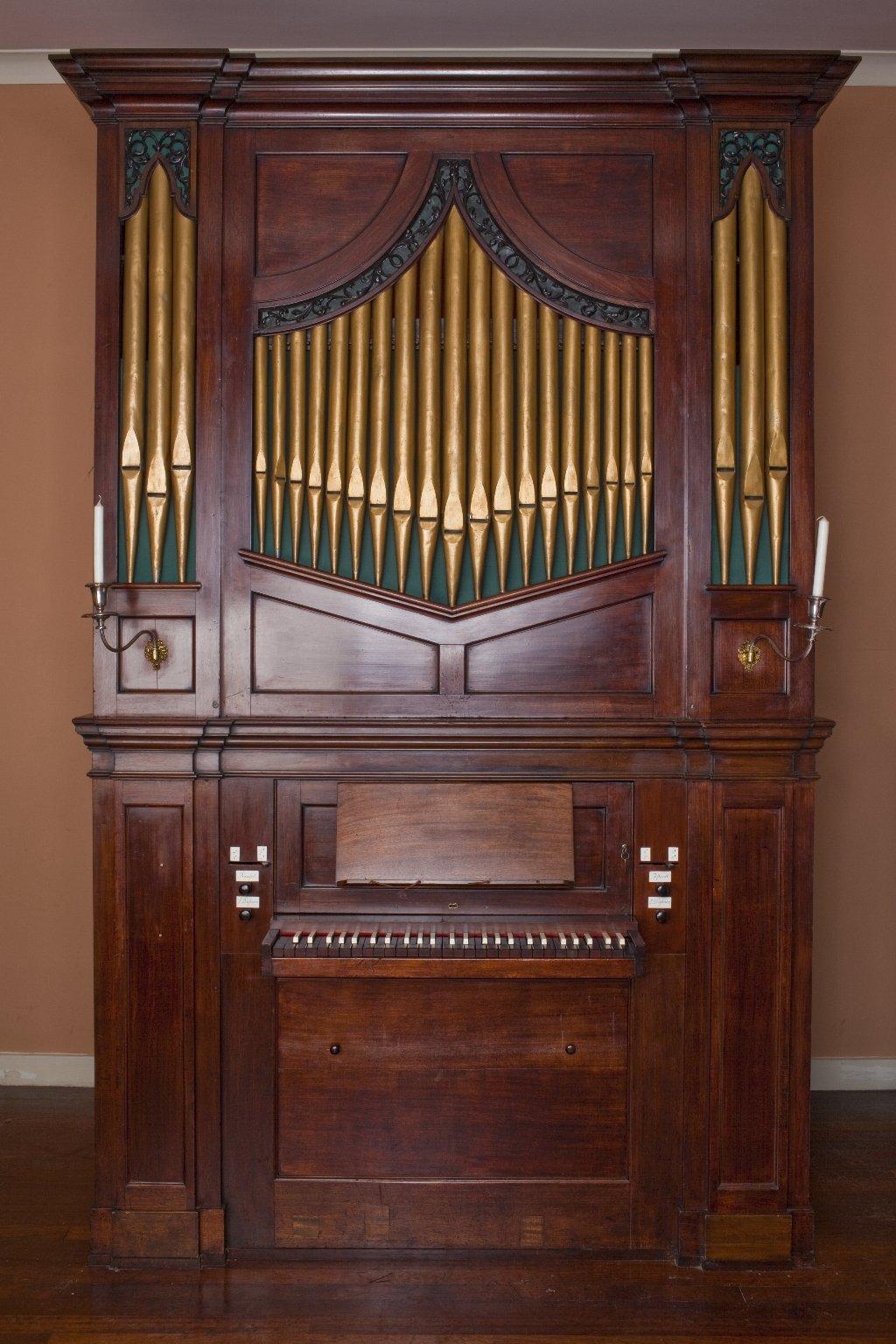
Chamber organ | Unknown maker | Circa 1680
Chamber organ | Unknown maker | Circa 1680
(opens in a new tab) (opens in a new tab) (opens in a new tab) (opens in a new tab) (opens in a new tab)
(Note: Each icon above opens in a new tab.)
Audio Clips
This chamber organ was once played in a large home or small church. Unlike some organs of the time, whose bellows were pumped by a second performer, this instrument could be played by a single musician. They would need excellent coordination skills, since controlling the keys and the pedal that opens and closes the bellows could be a tricky task.
Built for a small church in Gloucestershire, this chamber organ is typical of English work of the mid-to-late seventeenth century. The metal pipes were added at a later date, as was the electric blower, although the instrument stillretains its original pedal to operate the bellows. The paintings on the inside ofthe doors probably date from the nineteenth century and represent King David and Saint Cecilia. Gift of Mr T.W. Hirst, 1952.
Related Instruments
Related Instruments